

The Ultimate Guide to Guitar Pedals: Types, Tips, and Tones

Updated: Apr 5
Guitar pedals are the secret sauce behind countless iconic tones, from crunchy rock distortion to lush ambient soundscapes. Whether you’re a beginner just getting into effects or a seasoned player looking to refine your pedalboard, understanding the world of guitar pedals can elevate your playing and creativity. This guide will walk you through the essential types of pedals, tips for setup, and advice to craft your perfect tone.
What Are Guitar Pedals?
Guitar pedals (also known as effects pedals or stompboxes) are compact devices that modify your guitar signal to create various sound effects. They can be as simple as a boost in volume or as complex as multi-layered reverbs and delays.
When connected in a sequence (commonly referred to as a “signal chain”), pedals give you the power to shape your tone before it reaches your amplifier. Pedals come in analog and digital forms, each offering distinct tonal characteristics. Analog pedals are loved for their warmth, while digital ones offer precision and versatility.
Types of Guitar Pedals
Let’s dive into the major categories of guitar pedals and what they bring to your sonic arsenal.
1. Distortion, Overdrive, and Fuzz
These pedals add grit and sustain to your sound, often used in rock, blues, and metal.
Overdrive: Emulates the natural breakup of a tube amp. Example: Ibanez Tube Screamer.
Distortion: Heavier and more aggressive. Example: Boss DS-1.
Fuzz: Saturated, vintage-sounding distortion. Example: Electro-Harmonix Big Muff Pi.
2. Modulation Pedals
These effects alter your sound in rhythmic or sweeping ways.
Chorus: Adds a shimmering, layered effect. Example: Boss CH-1 Super Chorus.
Phaser: Sweeps your tone with a phase-shifted duplicate. Example: MXR Phase 90.
Flanger: Similar to phaser but with a more metallic quality. Example: Electro-Harmonix Electric Mistress.
Tremolo: Modulates your volume up and down. Example: Boss TR-2.
3. Delay and Reverb
These pedals create space and dimension.
Delay: Repeats your signal at set intervals. Example: Boss DD-7 Digital Delay.
Reverb: Simulates room or hall acoustics. Example: Strymon BigSky.
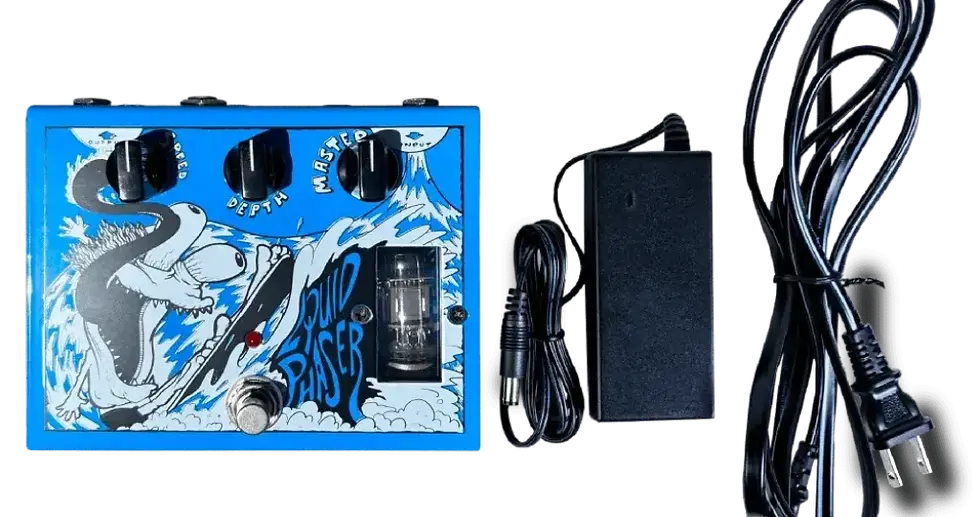
Bootlegger Lquid Phaser Tube Pedal
4. Dynamics Pedals
Control your volume and tone consistency.
Compressor: Evens out your volume levels. Example: MXR Dyna Comp.
EQ (Equalizer): Shapes specific frequency bands. Example: Boss GE-7.
Volume Pedal: Allows for hands-free volume adjustments.
5. Pitch and Filter Effects
These pedals change the pitch or filter specific frequencies.
Wah Pedal: Sweeping frequency filter controlled with your foot. Example: Dunlop Cry Baby.
Octave Pedal: Adds a note one octave up or down. Example: Electro-Harmonix POG2.
Envelope Filter: Dynamic, auto-wah-like effect. Example: Mu-Tron III.
6. Multi-Effects Units
These combine several effects in one unit, ideal for convenience.
Example Units: Line 6 Helix, Boss GT-1000
Great for gigging musicians and home recording

How to Build a Pedalboard
Creating a functional pedalboard is part art, part science.
Choosing Your Pedals
Start by identifying your core needs: distortion, delay, and modulation effects are good starting points. Consider your music style and what tones inspire you.
Order of Effects (Signal Chain Basics)
A common signal chain might look like:
Tuner
Dynamics (compressor, EQ)
Overdrive/Distortion
Modulation (chorus, phaser)
Delay
Reverb
While there’s no strict rule, this order generally maintains clarity and consistency in tone.
Power Supply & Cabling
Use isolated power supplies to avoid noise issues. Keep cables short and of high quality to preserve your tone.
DIY vs Prebuilt Boards
DIY: Fully customizable but requires more planning.
Prebuilt: Convenient and often include built-in power.
Tips for Getting the Best Tone from Guitar Pedals
Less is more: Too many effects can muddy your sound.
Know your gear: Learn how each pedal interacts with your amp and guitar.
Experiment: Small changes in placement or settings can dramatically affect tone.
Stacking drive pedals: Try stacking overdrive with distortion for richer tones.
Use your ears: Trust your ears over presets or advice—what sounds good is good.
Common Mistakes to Avoid
Improper signal chain order: Can result in noisy or weak tone.
Bad power supply: Leads to hums and poor performance.
Too many pedals: Can distract from playing and overcomplicate your tone.
Ignoring bypass modes: Know whether your pedal is true bypass or buffered.
You May Read Also: Best Guitar Tuner: Ultimate Buyer’s Guide to Tuner
Recommendations for Beginners
Here’s a simple and affordable starter setup:
Tuner Pedal (e.g., Boss TU-3)
Overdrive Pedal (e.g., Ibanez Tube Screamer Mini)
Delay Pedal (e.g., Donner Yellow Fall)
Reverb Pedal (e.g., TC Electronic Hall of Fame Mini)
This setup covers essential tones for blues, rock, pop, and even ambient styles.
Final Thoughts About Guitar Pedals
Guitar pedals are tools for creativity. Whether you want a clean bluesy boost or full-on spacey soundscapes, the right combination of pedals can help you get there. Don’t be afraid to experiment—even legendary tones were often born through trial and error. Start simple, learn each pedal inside out, and evolve your board as your sound matures.
Comments